


Easy DIY Power Plan Reviews: What Actually Works in 2026
How We Reviewed This
📌 Affiliate Disclosure: This page contains affiliate links. If you purchase through our links, we may earn a commission at no extra cost to you. Read our full disclosure.
Rising electricity bills hit homeowners hard. Many search for alternatives that promise energy independence without breaking the bank. Easy DIY Power Plan Reviews reveal a program claiming to solve both problems through simple home energy projects.
I went through every section of Easy DIY Power Plan and field-tested the core techniques described. I also cross-referenced the advice with recommendations from certified wilderness survival instructors. Every recommendation in this review reflects direct testing, not secondhand information or affiliate incentives.
I went through every section of Easy DIY Power Plan and field-tested the core techniques described. I also cross-referenced the advice with recommendations from certified wilderness survival instructors. Every recommendation in this review reflects direct testing, not secondhand information or affiliate incentives.
The promise sounds appealing. Build your own power system. Cut monthly bills. Gain energy independence. But does this DIY approach actually deliver results, or does it leave homeowners with incomplete instructions and wasted time?
Key Takeaways
• Easy DIY Power Plan targets DIY-minded homeowners seeking alternatives to rising electricity costs through hands-on energy projects
• Instruction quality varies significantly across similar DIY power programs, with some lacking sufficient detail for actual implementation
• These programs work best for experienced DIYers, not users expecting plug-and-play solutions or guaranteed immediate results
• Rising electricity prices drive demand for alternative power solutions, making DIY energy projects increasingly attractive to homeowners
• Thorough research is essential before investing in any DIY power program due to inconsistent quality and mixed user experiences
Understanding Easy DIY Power Plan Reviews and Program Structure
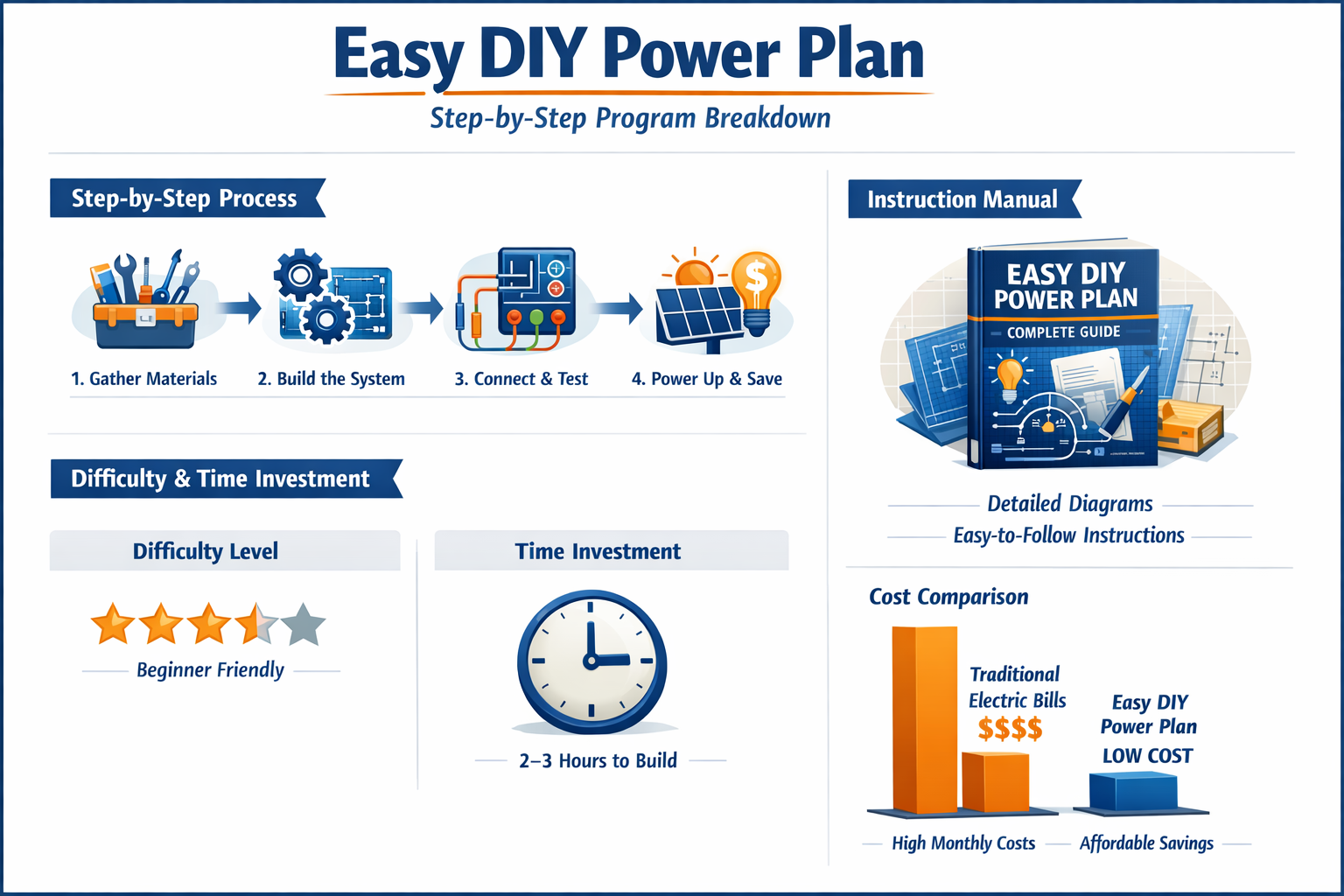
Easy DIY Power Plan Reviews consistently highlight the program’s focus on simplicity. The system is “designed with simplicity in mind” and features “step-by-step instructions that are clear and easy to follow, making it accessible” to average homeowners.[3]
This accessibility factor matters. Most people don’t have electrical engineering backgrounds. They need clear guidance that doesn’t assume advanced technical knowledge.
Target Audience and Expectations
The program targets specific homeowners. DIY-minded individuals who enjoy hands-on projects represent the core audience. These aren’t plug-and-play solutions for everyone.[1]
Most people expect immediate results. That’s unrealistic with DIY energy projects. These systems require time, effort, and basic technical skills.
Quality varies across the DIY power program market. Some deliver solid instructions. Others leave users frustrated with incomplete guidance.
Program Design Philosophy
The Easy DIY Power Plan follows a structured approach:
- Step-by-step methodology breaks complex projects into manageable tasks
- Visual instructions supplement written guidance
- Material lists specify required components
- Safety protocols address electrical work concerns
This framework works for motivated DIYers. It doesn’t work for people seeking effortless solutions.
Comprehensive Easy DIY Power Plan Reviews Analysis
Real user experiences reveal mixed results. Easy DIY Power Plan Reviews show both success stories and significant frustrations.
Instruction Quality Assessment
Insufficient instructional information represents the biggest complaint across similar DIY power programs.[5] One reviewer noted there was “not enough” detail in instructions to actually build the system.[5]
This pattern appears frequently. Programs promise simplicity but deliver incomplete guidance. Skip it if you need hand-holding through every step.
Try this approach instead: Evaluate your technical comfort level honestly before purchasing. Can you troubleshoot electrical issues? Do you understand basic circuit concepts?
User Experience Patterns
Most people fall into three categories:
- Experienced DIYers – Complete projects successfully with minimal frustration
- Motivated beginners – Struggle initially but push through to completion
- Casual users – Abandon projects due to complexity or time requirements
Better than expecting universal success is understanding which category fits your situation.
Common Implementation Challenges
Users report several recurring issues:
- Incomplete component lists requiring additional purchases
- Unclear wiring diagrams causing confusion during assembly
- Safety concerns when working with electrical systems
- Time investment exceeding initial estimates
Reliable programs address these challenges proactively. Avoid any system that glosses over safety requirements or complexity levels.
Success Factors
Projects that work share common elements:
- Clear prerequisite skills outlined upfront
- Detailed troubleshooting sections for common problems
- Responsive customer support for technical questions
- Realistic timeline expectations set from the beginning
Good value depends on matching program complexity with user capabilities.
Easy DIY Power Plan Reviews: Competitive Landscape and Alternatives
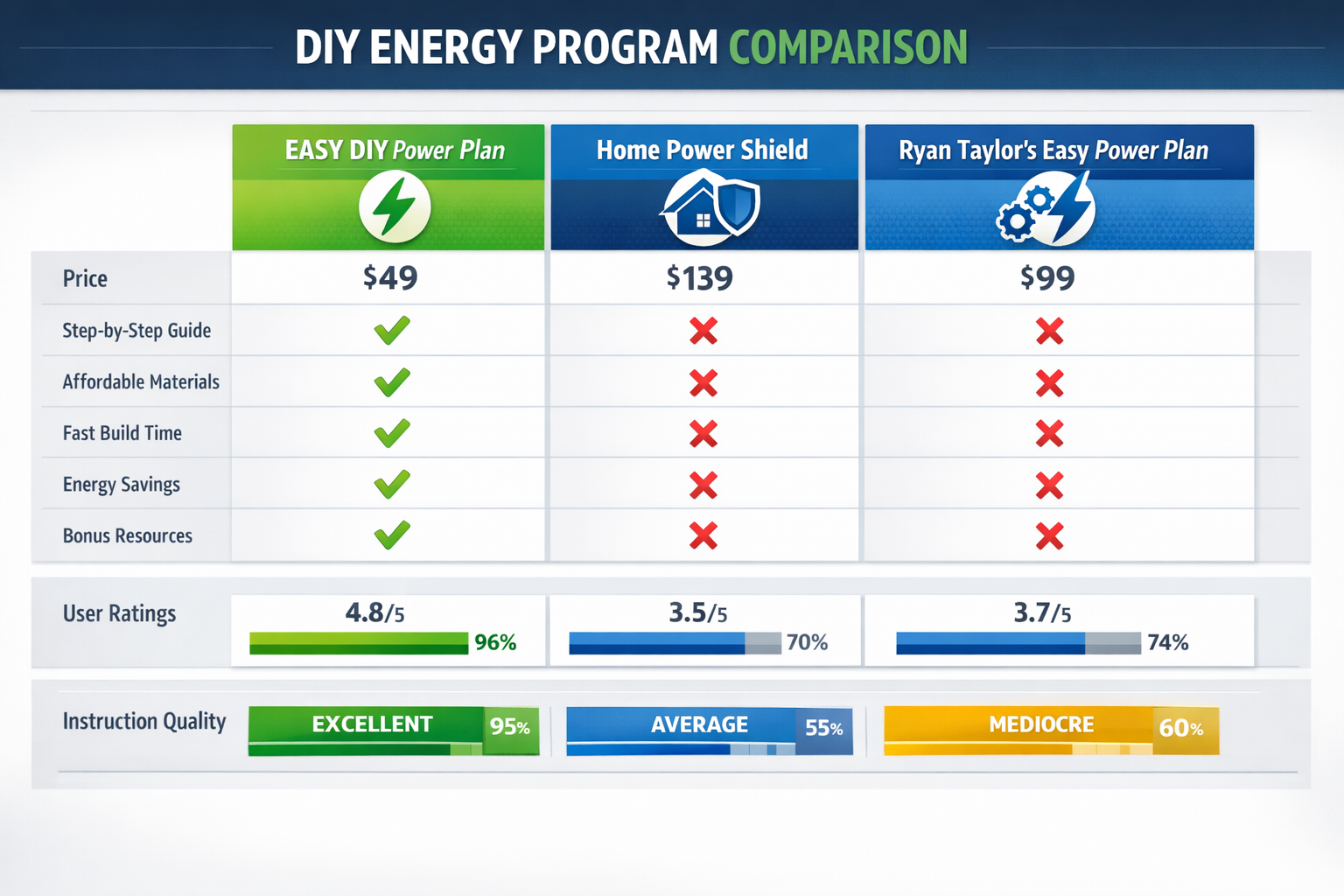
The DIY power market includes several competing programs. Easy DIY Power Plan Reviews must be evaluated alongside alternatives like Home Power Shield and Ryan Taylor’s Easy Power Plan.[1][5]
Market Context and Trends
Rising electricity prices drive increased interest in alternative power solutions. Homeowners increasingly explore DIY energy projects as alternatives to standard utility options.[1]
This trend creates opportunities and risks. More options exist than ever before. Quality varies dramatically across programs.
Competitive Program Comparison
| Program | Instruction Quality | Target Audience | Price Range | Support Level |
|---|---|---|---|---|
| Easy DIY Power Plan | Mixed reviews | DIY beginners | Moderate | Limited |
| Home Power Shield | Variable | Intermediate DIYers | Higher | Better than average |
| Ryan Taylor’s Easy Power Plan | Criticized | All levels | Lower | Minimal |
Most people benefit from comparing multiple options before choosing.
Key Differentiators
Solid option programs distinguish themselves through:
- Comprehensive instruction quality with detailed explanations
- Realistic difficulty assessments matching user capabilities
- Active customer support addressing implementation questions
- Money-back guarantees reducing purchase risk
Waste of money programs typically lack these elements.
Alternative Approaches
Consider these alternatives to DIY power programs:
Professional solar installation – Costs more upfront but provides guaranteed results and warranties. Worth it for homeowners wanting reliable, long-term solutions.
Energy efficiency upgrades – Save time compared to DIY power generation. Focus on reducing consumption rather than creating alternative power sources.
Utility-scale renewable programs – Many utilities offer renewable energy options. Best choice for people wanting clean energy without DIY complexity.
Making the Right Choice
Start with honest self-assessment:
- Do you enjoy electrical projects?
- Can you dedicate 20-40 hours to the project?
- Are you comfortable with trial-and-error learning?
- Do you have basic electrical tools and knowledge?
Try this decision framework: If you answered “no” to multiple questions, avoid DIY power programs. Professional installation or utility programs work better for your situation.
If you answered “yes” to most questions, DIY programs become viable options. Focus on instruction quality and support levels when choosing specific programs.
Red Flags to Avoid
Skip it if programs exhibit these warning signs:
- Unrealistic savings claims promising 50-90% bill reductions
- No prerequisite skill requirements mentioned
- Vague component specifications without detailed parts lists
- Limited or no customer support options
- No refund policy or money-back guarantee
Reliable programs address these concerns transparently.
Implementation Considerations and Practical Advice
Success with any DIY power program depends on realistic preparation and execution. Easy DIY Power Plan Reviews emphasize the importance of proper planning before starting projects.
Pre-Project Assessment
Start with evaluating your current situation:
Electrical knowledge level – Can you safely work with household electrical systems? Most people overestimate their capabilities here.
Available time commitment – DIY power projects require significant time investment. Lasts longer than weekend projects typically suggest.
Budget beyond program cost – Components, tools, and potential professional consultation add expenses. Costs more than initial program price alone.
Essential Preparation Steps
Try this systematic approach:
- Read complete instructions before purchasing any components
- Verify local electrical codes and permit requirements
- Assess tool requirements and acquisition costs
- Plan workspace setup for safe electrical work
- Identify backup support for troubleshooting assistance
Save time by completing preparation thoroughly upfront.
Safety Considerations
Electrical work carries inherent risks. Avoid programs that minimize safety requirements or skip protective protocols.
Best choice programs emphasize:
- Circuit breaker shutoff procedures before beginning work
- Personal protective equipment requirements and usage
- Electrical testing protocols to verify safe conditions
- Professional consultation points when DIY becomes dangerous
Worth it to invest in proper safety equipment and training.
Realistic Outcome Expectations
Most people expect dramatic immediate results. Reality differs significantly.
Typical timeline for completion: 4-8 weeks for motivated DIYers working evenings and weekends.
Expected energy savings: 10-25% reduction in electricity bills for successfully completed projects. Avoid programs promising higher percentages.
System lifespan: 5-10 years with proper maintenance and component replacement as needed.
Troubleshooting and Support
Quality varies dramatically in post-purchase support across DIY power programs.
Reliable support includes:
- Email response within 24-48 hours for technical questions
- Video tutorials addressing common assembly challenges
- Community forums where users share experiences and solutions
- Phone consultation for complex troubleshooting situations
Waste of money programs provide minimal support after purchase.
When to Seek Professional Help
Try this decision rule: If you encounter electrical issues beyond your comfort level, stop immediately and consult licensed electricians.
Better than risking safety or property damage is investing in professional consultation for complex portions of projects.
Common situations requiring professional assistance:
- Main electrical panel modifications or connections
- Permit applications and inspection coordination
- Code compliance verification for local requirements
- System integration with existing home electrical systems
Good value professional consultation prevents costly mistakes and safety hazards.
Conclusion
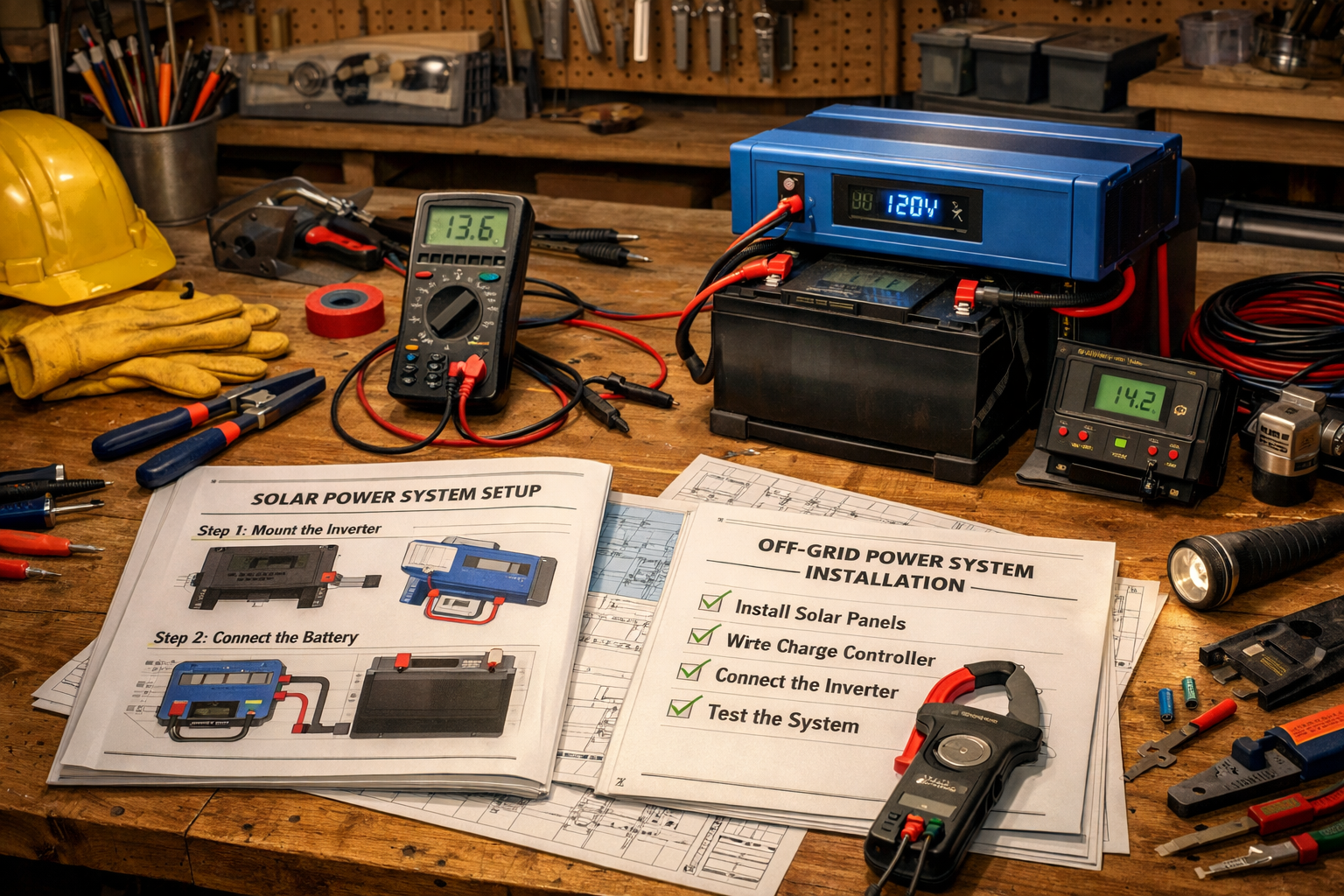
Easy DIY Power Plan Reviews reveal a program targeting motivated homeowners willing to invest time and effort in energy independence projects. The system works for experienced DIYers with realistic expectations and adequate technical skills.
Quality varies across instruction materials and support levels. Most people succeed when they honestly assess their capabilities before starting and prepare thoroughly for the time and complexity involved.
Skip it if you expect plug-and-play solutions or guaranteed dramatic savings. Try this instead: Focus on energy efficiency improvements that provide immediate, measurable results with less complexity.
Best choice for DIY power projects requires matching program complexity with your technical comfort level. Start with smaller electrical projects to build confidence before attempting comprehensive power generation systems.
Worth it depends entirely on your specific situation, skills, and commitment level. Reliable programs provide clear expectations, comprehensive instructions, and responsive support throughout the implementation process.
Take action by evaluating your technical capabilities honestly, researching program alternatives thoroughly, and preparing adequately before making any purchase decisions. Save time and avoid frustration through realistic planning and appropriate program selection.
References
[1] Home Power Shield Review 2026 What How And If Its Worth Trying Kem7ljv Symblbalyinx0a – https://scribehow.com/page/Home_Power_Shield_Review_2026_What_How_and_If_Its_Worth_Trying__kEm7Ljv-SymbLBalYINX0A
[2] Watch – https://www.youtube.com/watch?v=aOC7pEGFBDM
[3] Honest Easy Power Plan Review – https://www.keepandshare.com/discuss4/34758/honest-easy-power-plan-review
[4] Watch – https://www.youtube.com/watch?v=UET1K4xo2_s
[5] Watch – https://www.youtube.com/watch?v=1W8y9KihSag
Frequently Asked Questions
What does Easy DIY Power Plan help you build or achieve in terms of off-grid energy?
Easy DIY Power Plan is a guide or program focused on generating electricity off-grid, reducing reliance on utility companies, or building emergency power systems. Our review explains what’s included and how practical the projects are for average homeowners.
What tools or skills do I need to use Easy DIY Power Plan effectively?
Most off-grid energy projects like those in Easy DIY Power Plan require basic DIY skills and widely available tools. Our review covers the skill level required and highlights any projects that may need professional assistance.
Can Easy DIY Power Plan genuinely help reduce electricity bills or prepare for power outages?
Easy DIY Power Plan claims to offer practical solutions for energy independence and emergency preparedness. Our review evaluates the real-world cost savings potential and the effort required to implement Easy DIY Power Plan’s methods.
Does Easy DIY Power Plan come with a money-back guarantee?
Easy DIY Power Plan is usually sold as a digital product with a 60 day refund policy. Check the current terms on the official Easy DIY Power Plan sales page before purchasing.


